Guide
May 18, 202612 min read
Conversational AI Avatars Explained: How Interactive AI Humans Work in 2026
What conversational AI avatars are, how interactive AI humans work, and why businesses use them for support, education, sales, and virtual assistants.
Nikhil Anand
Lead Developer @ DevKit
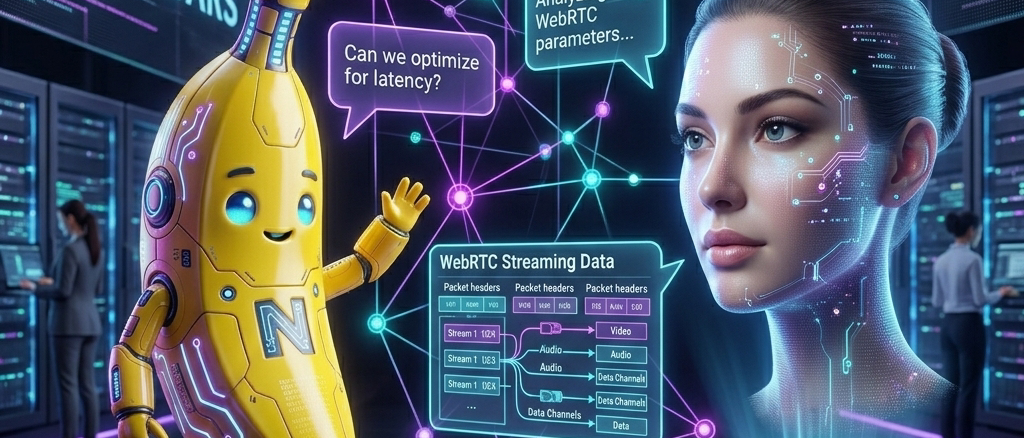
Artificial intelligence is moving beyond text-based chatbots.
We are entering a new era where users can speak naturally with AI-powered digital humans that respond with realistic voices, facial expressions, and real-time conversations. These systems are called conversational AI avatars, and they are quickly becoming one of the fastest-growing categories in AI software.
From customer support and education to healthcare and virtual sales agents, interactive AI avatars are transforming how businesses interact with users online.
Unlike traditional chatbots that only display text responses, a conversational AI avatar combines:
- large language models
- voice AI
- real-time streaming
- facial animation
- speech synthesis
to create human-like interactive experiences.
This technology is already powering:
- AI tutors
- virtual onboarding assistants
- AI sales representatives
- digital receptionists
- AI presenters
- customer support agents
In this guide, you'll learn:
- what a conversational AI avatar is
- how realtime AI avatars work
- the technologies behind AI talking avatars
- real-world business use cases
- how developers are building AI avatar chatbots using Next.js, OpenAI, and streaming avatar systems
You'll also discover how developers can speed up development using the open-source GitHub starter project and production-ready AI avatar kit from: DevKit Market
GitHub repository: AI Avatar Video Agent Starter Kit GitHub Repository
Production-ready starter kit: AI Avatar Video Agent Starter Kit
Table of Contents
- What Is a Conversational AI Avatar?
- Why Conversational AI Avatars Are Growing Fast
- How Conversational AI Avatars Work
- Core Technologies Behind AI Avatars
- Conversational AI Avatars vs Traditional Chatbots
- Real-World Use Cases
- Why Businesses Are Investing in AI Avatars
- Technical Challenges of Conversational AI
- Future of Interactive AI Avatars
- How Developers Build Conversational AI Avatars
- Building Faster with a Starter Kit
- FAQ
- Final Thoughts
What Is a Conversational AI Avatar?
A conversational AI avatar is an AI-powered digital human that can communicate with users using voice, video, and real-time interaction.
Unlike traditional chatbots that rely on text-only interfaces, a conversational AI avatar combines multiple AI systems together to create a more natural communication experience.
These systems typically include:
- speech recognition
- large language models
- voice synthesis
- facial animation
- streaming video infrastructure
The result is an interactive AI avatar that can:
- answer questions
- explain products
- provide customer support
- teach users
- guide onboarding flows
- hold real-time conversations
Modern AI virtual avatars are designed to feel more human and engaging than static chat interfaces.
Instead of typing:
Information
"How can I reset my password?"
users can simply speak naturally to an AI talking avatar that responds conversationally with voice and facial expressions.
This creates a significantly more immersive experience.
Platforms like HeyGen are helping developers build these systems using realtime avatar APIs and streaming infrastructure.
Why Conversational AI Avatars Are Growing So Fast
DevKit GrowthBoilerplate
Build 10x faster with production-grade templates
Join 15,000+ developers shipping SaaS products without the repetitive plumbing. Get free developer checklists, boilerplate kits, and architectural tutorials.
The popularity of conversational AI avatars is being driven by several major trends happening simultaneously.
1. Users Prefer Natural Interaction
People naturally respond better to:
- faces
- voices
- conversational interaction
than static text boxes.
Human communication is emotional and visual. Traditional chatbots often feel robotic because they remove those elements.
Conversational AI avatars bring them back.
2. Large Language Models Became Good Enough
Earlier chatbots relied heavily on scripted workflows.
Modern AI systems powered by:
- OpenAI
- Claude
- Gemini
can now hold surprisingly realistic conversations.
This made conversational avatars dramatically more useful.
3. Realtime Streaming Technology Improved
Realtime streaming used to be difficult and expensive.
Today, technologies like:
- WebRTC
- realtime voice APIs
- streaming avatar systems
allow developers to create low-latency conversational experiences directly in the browser.
4. Businesses Want More Engagement
Companies are increasingly searching for ways to:
- improve onboarding
- increase retention
- reduce support costs
- personalize customer interaction
Interactive AI avatars help solve these problems while also creating memorable user experiences.
How Conversational AI Avatars Work
At a high level, a realtime AI avatar combines multiple systems together into a single communication pipeline.
text
User Voice
    ↓
Speech Recognition
    ↓
Large Language Model
    ↓
AI Response
    ↓
Text-to-Speech
    ↓
Avatar Animation
    ↓
Realtime Video Stream
Let's break down each layer.
Step 1: User Voice Input
The user speaks into the application using a microphone.
The browser captures audio using:
- WebRTC
- MediaDevices API
- realtime streaming protocols
This audio is then sent to the speech recognition layer.
Step 2: Speech-to-Text Processing
Speech recognition systems convert audio into text.
Popular providers include:
- Whisper
- Deepgram
- AssemblyAI
This text becomes the input for the conversational AI model.
Step 3: Large Language Model Processing
The LLM handles:
- reasoning
- memory
- contextual understanding
- response generation
This is the "brain" of the conversational AI avatar.
Most systems currently rely on:
- OpenAI GPT models
- Claude
- Gemini
for conversational intelligence.
Step 4: Voice Synthesis
The AI-generated response is converted back into realistic speech using text-to-speech systems.
Popular voice providers include:
- ElevenLabs
- Azure Speech
- HeyGen Voice
Voice quality plays a major role in making voice AI avatars feel believable.
Step 5: Avatar Rendering
The avatar engine synchronizes:
- lip movement
- facial expressions
- eye movement
- voice output
to create a realistic digital human.
This video stream is then displayed to the user in real time.
Core Technologies Behind Conversational AI Avatars
Building a realtime AI avatar requires multiple technologies working together.
Large Language Models
LLMs power:
- dialogue generation
- contextual reasoning
- memory handling
- natural conversation
Without LLMs, conversational avatars would still feel scripted and limited.
Streaming Avatar Systems
Streaming avatar platforms handle:
- facial animation
- lip sync
- realtime rendering
- avatar motion
This infrastructure is one of the hardest parts of building conversational AI systems.
WebRTC
Realtime communication depends heavily on low latency.
WebRTC enables:
- live video
- live audio
- realtime streaming
- browser-to-browser communication
Without WebRTC, avatars often feel delayed and unnatural.
Voice AI
Voice systems handle:
- speech recognition
- speech synthesis
- emotional intonation
- voice cloning
The quality of voice interaction strongly affects user engagement.
Conversational AI Avatars vs Traditional Chatbots
Traditional chatbots and conversational AI avatars solve different problems.
Traditional chatbots are still effective for:
- simple automation
- FAQs
- structured workflows
But conversational AI avatars create significantly better engagement for:
- onboarding
- sales
- education
- support
- entertainment
Real-World Use Cases of Conversational AI Avatars
The most exciting part of conversational AI is how quickly real businesses are adopting it.
Customer Support
An AI avatar assistant can serve as:
- support agent
- troubleshooting assistant
- onboarding guide
This reduces support workload while improving customer experience.
Education and AI Tutors
Interactive AI tutors can:
- explain lessons
- answer questions
- teach languages
- guide students
Conversational avatars feel much more engaging than static educational apps.
Healthcare
Healthcare organizations are experimenting with AI digital humans for:
- patient onboarding
- appointment guidance
- wellness coaching
Human-like interaction improves comfort during conversations.
Sales and Product Demos
An AI video avatar can:
- explain products
- qualify leads
- answer objections
- guide demos
This creates interactive sales experiences directly on websites.
Virtual Receptionists
Companies are deploying AI receptionists that can:
- greet visitors
- answer questions
- provide navigation help
- route conversations
24/7 availability is a major advantage.
Why Businesses Are Investing in AI Avatars
Businesses are investing heavily in conversational AI avatars because user expectations are changing rapidly.
Users increasingly expect:
- voice interaction
- personalization
- natural communication
- instant support
AI presenter avatars and conversational systems help companies:
- reduce support costs
- improve onboarding
- increase engagement
- automate repetitive communication
- personalize customer experiences
This technology is especially attractive because it combines automation with human-like interaction.
Technical Challenges of Conversational AI
Despite rapid growth, conversational AI avatars still face significant technical challenges.
Latency
Even small delays break immersion.
Realtime interaction requires:
- fast streaming
- optimized APIs
- low-latency voice synthesis
Latency remains one of the hardest engineering problems.
Infrastructure Costs
Realtime AI avatars are expensive.
Costs include:
- GPU rendering
- streaming bandwidth
- voice APIs
- LLM tokens
Scaling conversational AI infrastructure is still difficult for many startups.
Conversation Quality
LLMs can still:
- hallucinate
- lose context
- misunderstand intent
which affects user trust.
Realism Challenges
Users quickly notice:
- unnatural lip sync
- robotic emotion
- awkward pauses
Creating believable AI humans remains difficult.
Future of Interactive AI Avatars
The future of conversational AI avatars looks extremely promising.
Future systems will likely include:
- emotional intelligence
- long-term memory
- multimodal reasoning
- autonomous actions
- realistic emotional expression
We are moving toward AI systems that feel closer to digital coworkers than simple assistants.
As infrastructure improves, conversational AI avatars may become common across:
- SaaS products
- mobile apps
- ecommerce
- healthcare
- gaming
- enterprise software
How Developers Build Conversational AI Avatar Applications
Developers building conversational AI avatars typically combine:
- Next.js
- OpenAI APIs and AI avatar APIs
- streaming avatar SDKs
- WebRTC
- voice AI providers
A common architecture looks like this:
text
Frontend (Next.js)
      ↓
Realtime Streaming Layer
      ↓
Avatar Engine
      ↓
OpenAI API
      ↓
Conversation Memory
      ↓
Database
The open-source AI Avatar Video Agent Starter Kit GitHub Repository demonstrates how developers can structure a realtime conversational AI avatar application using:
- Next.js
- TypeScript
- OpenAI
- realtime avatar infrastructure
If you want a step-by-step build walkthrough, see our companion guide: How To Build AI Avatar Chatbots with Next.js, HeyGen, and OpenAI.
Building Faster with a Production-Ready Starter Kit
Building realtime conversational AI infrastructure from scratch takes significant engineering effort.
Developers need to manage:
- streaming sessions
- avatar synchronization
- voice pipelines
- OpenAI integration
- realtime state management
- WebRTC handling
The AI Avatar Video Agent Starter Kit provides a production-ready foundation for developers who want to launch conversational AI avatar applications faster.
The starter kit includes:
- Next.js architecture
- OpenAI integration
- realtime avatar setup
- TypeScript support
- scalable frontend structure
- modern UI components
This dramatically reduces development time for teams building:
- AI avatar chatbots
- virtual onboarding assistants
- AI presenters
- conversational sales agents
- realtime AI companions
Information
If you want to build a realtime conversational AI avatar without setting up streaming infrastructure from scratch, you can explore the AI Avatar Video Agent Starter Kit built with Next.js, OpenAI, and HeyGen.
FAQ
What is a conversational AI avatar?
A conversational AI avatar is a digital human powered by artificial intelligence that can communicate using voice, facial animation, and realtime interaction.
How do conversational AI avatars work?
They combine:
- speech recognition
- large language models
- text-to-speech systems
- streaming avatar engines
- realtime video infrastructure
to create human-like conversations.
What is the difference between an AI avatar and a chatbot?
Traditional chatbots usually rely on text-only interaction, while conversational AI avatars include voice, facial animation, and realtime streaming.
Which technologies are used to build AI avatars?
Most developers use:
- OpenAI
- Next.js
- WebRTC
- streaming avatar APIs and AI avatar SDKs
- speech AI systems
Can conversational AI avatars talk in real time?
Yes. Modern conversational avatars use realtime streaming systems and voice AI to communicate with users instantly.
Which API is best for AI avatars?
For realtime streaming avatars, HeyGen's Streaming Avatar API is currently one of the most accessible options for developers. Pair it with OpenAI for conversational intelligence and a voice provider like ElevenLabs or Deepgram for input/output.
Final Thoughts
Conversational AI avatars represent one of the biggest shifts happening in human-computer interaction.
Instead of typing into static interfaces, users can now speak naturally with AI-powered digital humans capable of realtime conversation.
The combination of:
- large language models
- realtime streaming
- voice AI
- avatar rendering
is creating entirely new categories of applications.
For developers, this space is still early enough to offer major opportunities. If you need support architecting custom model endpoints or setting up RAG systems, look into my services for AI development or learn about hiring an AI developer to build your complete application.
Projects like the AI Avatar Video Agent Starter Kit GitHub Repository and the production-ready AI Avatar Video Agent Starter Kit make it significantly easier to experiment with realtime conversational AI systems without spending weeks building streaming infrastructure from scratch.
As conversational AI continues evolving, interactive AI avatars will likely become a standard interface across the modern web.
Skip the setup and start shipping
Love this guide? All these production patterns are pre-configured inside our SaaS packages. Save 40+ hours of setup, layout design, responsive coding, and analytics piping.
Explore the KitsRelated Articles
Selected insights to level up your development workflow.
Guide
13 min
AI Video Agents for Customer Support: How Businesses Are Replacing Traditional Support Workflows with Conversational AI
How AI video agents and conversational AI customer support avatars are replacing traditional chatbots, call centers, and ticketing — with use cases, architecture, and ROI.
Read more
Tutorial
14 min
How To Build AI Avatar Chatbots with Next.js, HeyGen, and OpenAI
Build a real-time AI avatar chatbot with Next.js, HeyGen Streaming Avatar, OpenAI, and WebRTC — architecture, code, and deployment.
Read more
Tutorial
13 min
How To Build a High-Converting SaaS Landing Page with Next.js 15
Build a high-converting SaaS landing page with Next.js 15 — hero, pricing, CTAs, trust signals, App Router architecture, technical SEO, and Core Web Vitals tuning.
Read more
Free for everyoneno signup · no credit card
Keep building with free resources
Production-ready starter kits and zero-friction developer tools — the same ones we use to ship our own products.
4 kits
13 tools
Starter Kits
FreeFeatured
Next.js Blog Kit
MDX-powered blog with full SEO, dark mode, RSS feed, reading time, and syntax highlighting. Deploy to Vercel in one click.
Next.jsMDXTailwind
Get kit
Developer Tools
12k+
usage / mo
Shadcn/UI Component Previewer
Live preview of shadcn/ui components with instant copy-paste code. Browse rendered components and grab snippets.
Productivity
Open tool
Next.js Project Structure Generator
8.5kSelect your stack and instantly get a production-ready folder structure. Copy the entire scaffold in one click.
.env File Generator
24kPick your tech stack and get a complete, commented .env boilerplate file. Never forget an environment variable.
Prisma Schema Generator
5.2kDescribe your data model visually and get a valid, production-ready Prisma schema file instantly.
Looking for something specific?
Browse the full library — 7+ kits across 4+ categories.