saas
Sep 26, 202615 min read
Ultimate Guide: Next.js Multi-Tenant SaaS with Prisma (2026)
Build a scalable Next.js multi-tenant SaaS with Prisma. This guide covers architecture, tenant isolation, data strategies, RBAC, and secure routing for modern SaaS applications.
DevKit Market
Drafted with AI assistance, DevKit Market Analysis
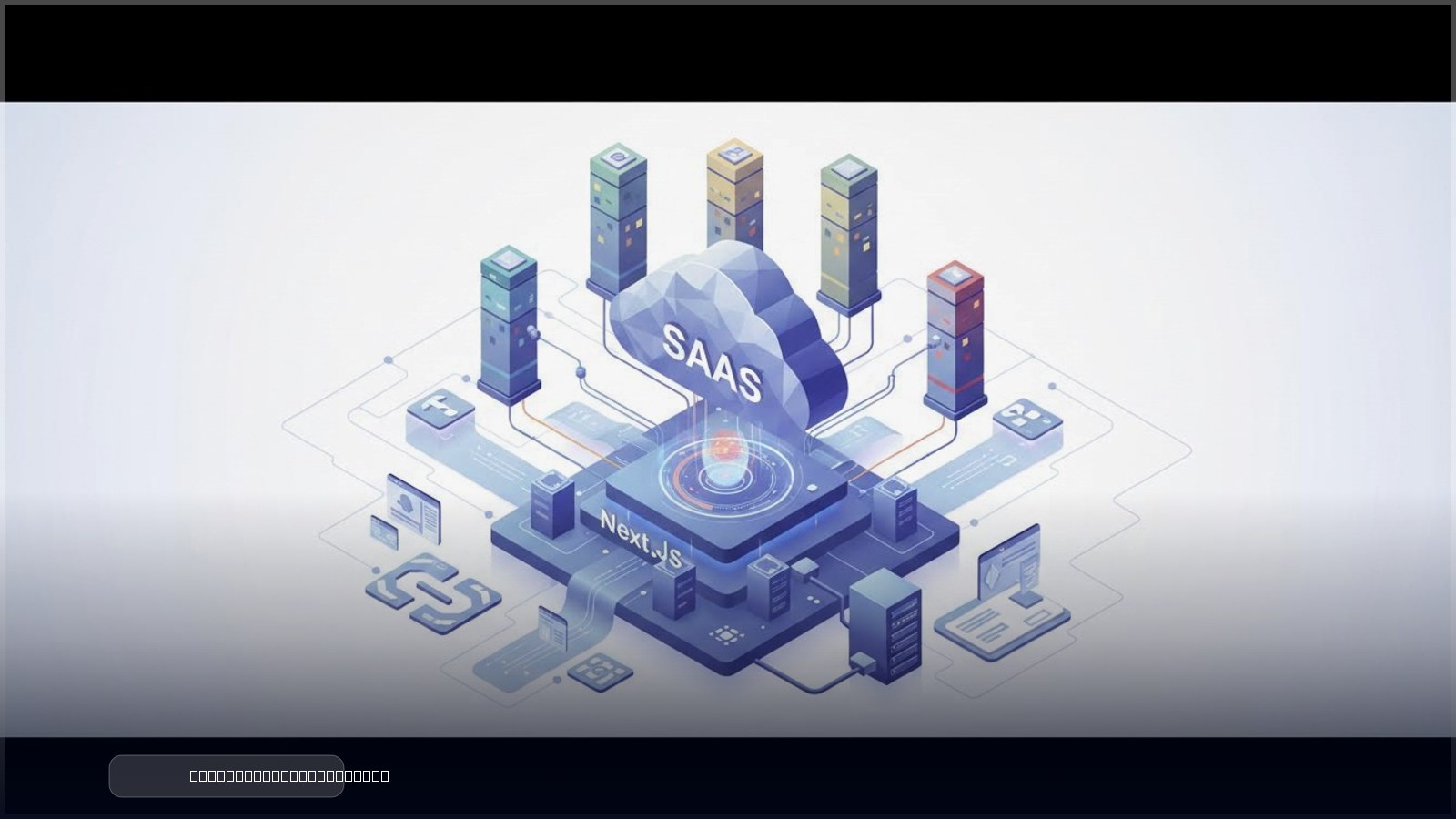
Building a scalable and secure software-as-a-service (SaaS) platform presents unique architectural challenges, especially when catering to multiple organizations from a single codebase. The demand for efficient resource utilization and streamlined operations makes Next.js multi-tenant SaaS a compelling solution for modern web applications. However, implementing robust multi-tenancy requires careful consideration of data segregation, user management, and application security. This guide addresses the complexities inherent in designing a high-performance Next.js SaaS architecture that can grow with your business.
Experienced developers and architects frequently grapple with ensuring stringent tenant isolation while maintaining application performance and developer velocity. Key concerns include how to securely partition data, manage user roles across different tenants, and implement tenant-aware routing that prevents unauthorized access. Achieving effective multi-tenancy demands a strategic approach to database design, often leveraging advanced features of PostgreSQL multi-tenancy, and a robust SaaS RBAC system. This ensures each workspace-based SaaS environment operates independently and securely.
This comprehensive guide will deep dive into architecting a modern multi-tenant application using Next.js and Prisma, providing practical strategies for data isolation and secure routing patterns. We will explore how Prisma multi-tenant configurations can simplify database interactions and discuss patterns like Next.js Proxy for managing tenant context. By the end, you will possess a clear roadmap for building a scalable, secure, and maintainable multi-tenant SaaS platform, ready for 2026 and beyond.
Understanding Multi-Tenancy in Modern SaaS Architecture
Multi-tenancy is a fundamental architectural pattern in modern SaaS, allowing a single instance of a software application to serve multiple customers, or "tenants." This approach leverages shared infrastructure, such as servers and databases, while ensuring each tenant experiences a logically isolated and customized environment. The economic advantages for SaaS providers are significant, primarily driven by reduced operational costs and increased resource utilization. Key architectural drivers for adopting multi-tenancy include achieving superior scalability, enhancing cost efficiency, and simplifying the overall operational management of the platform. This shared model enables providers to onboard numerous clients without deploying dedicated infrastructure for each, fostering a more sustainable and profitable business model.
Building such a robust platform requires powerful tools. For the frontend, Next.js stands out as an excellent choice for a modern multi-tenant application. Its capabilities for Server-Side Rendering (SSR) and Static Site Generation (SSG) deliver highly performant, SEO-friendly user interfaces crucial for dynamic content delivery. Furthermore, Next.js's integrated API routes simplify the backend-for-frontend pattern, allowing developers to build secure, tenant-aware endpoints directly within the same codebase. This unified development experience accelerates feature delivery and streamlines the management of complex user interactions across different tenants.
Complementing Next.js on the backend, Prisma emerges as a powerful Object-Relational Mapper (ORM) for managing data. Prisma's type-safety provides an unparalleled developer experience, reducing common runtime errors and improving code maintainability, which is vital for complex SaaS platforms. Its database agnosticism offers flexibility, allowing developers to choose or switch between various databases like PostgreSQL multi-tenancy without extensive code refactoring. This simplified data access layer is instrumental in implementing robust tenant isolation strategies, ensuring that each tenant's data remains securely separated even within a shared database schema.
Together, Next.js and Prisma form a formidable stack for architecting a scalable multi-tenant platform. The combination facilitates advanced features like tenant-aware routing and sophisticated SaaS RBAC (Role-Based Access Control) mechanisms. For instance, a well-implemented Next.js multi tenant setup can leverage middleware or a Next.js Proxy to dynamically route requests and apply tenant-specific logic before reaching the application. This synergy ensures that despite sharing underlying resources, each workspace-based SaaS tenant receives a highly personalized and secure experience, optimizing both performance and operational simplicity for the provider.
Designing Your Next.js Multi-Tenant SaaS Architecture
Architecting a robust Next.js SaaS platform requires careful consideration of how tenant-specific data and logic are handled throughout the application lifecycle. The foundation of any successful multi-tenancy implementation lies in effectively identifying and isolating each tenant's context from the moment a request hits your server. This initial design phase is critical for ensuring both data security and operational scalability. We need to establish clear methods for tenant identification and integrate this context seamlessly into the Next.js request flow, ultimately informing all subsequent data operations.
The first step involves establishing reliable tenant identification methods. Developers typically choose between subdomain-based, path-based, or custom header-based strategies. Subdomain-based identification (e.g., tenantA.your-domain.com) offers strong branding and clear separation, often preferred for a workspace-based SaaS. Path-based routing (your-domain.com/tenantA) simplifies DNS management and SSL certificates but may require more complex URL rewriting. For API-centric applications or internal tools, a custom X-Tenant-ID header provides flexibility, though it shifts the burden of identification to the client. The chosen method dictates how the application initially recognizes which tenant is making the request, forming the bedrock for secure tenant-aware routing.
Once a request arrives, integrating the tenant context into the server-side processing is paramount. Next.js Middleware is the ideal mechanism for this. It allows you to intercept incoming requests, parse the tenant identifier from the URL (host or path) or headers, and then inject this tenantId into the request object or a global context. This ensures that every subsequent server-side operation, from API route handlers to data fetching functions, has immediate access to the current tenant's identity. This centralized approach in Next.js Middleware is crucial for enforcing tenant isolation consistently across your application, preventing data leakage between different customers.
Structuring your application around this tenant context is the next logical step. Your Next.js pages and API routes must be designed to consume the tenantId provided by the middleware. For instance, an API route fetching user data would use the tenantId to scope its database query, ensuring only users belonging to the current tenant are returned. This extends to implementing SaaS RBAC (Role-Based Access Control), where user permissions are also evaluated within the identified tenant's scope. The core data flow then becomes intrinsically linked to this tenant context; every database interaction, especially with Prisma multi-tenant configurations or PostgreSQL multi-tenancy strategies, must include the tenantId as a mandatory filter. This ensures that all data queries and API responses are correctly filtered, making the multi tenant SaaS Next.js application secure and performant.
Prisma and Data Multi-Tenancy: Strategies for Isolation
DevKit GrowthBoilerplate
Build 10x faster with production-grade templates
Join 15,000+ developers shipping SaaS products without the repetitive plumbing. Get free developer checklists, boilerplate kits, and architectural tutorials.
Architecting a robust multi-tenant application demands careful consideration of data isolation strategies. For a modern Next.js SaaS architecture, Prisma offers flexible ways to implement these patterns, each with distinct trade-offs in terms of security, scalability, and operational complexity. The core challenge lies in ensuring that each tenant's data remains strictly separated and inaccessible to others, a principle known as tenant isolation.
The most common approach for multi-tenancy, particularly for early-stage Next.js SaaS products, is a shared database with a shared schema, relying on a tenantId discriminator column. In this model, every table includes a tenantId field, and all queries must filter by the authenticated tenant's ID. Prisma supports this naturally through its powerful filtering capabilities. Developers can implement global query middleware or create custom Prisma client extensions to automatically inject the where: { tenantId: currentTenantId } clause into every relevant operation. While straightforward to set up, this method places a heavy reliance on application-level enforcement, making robust SaaS RBAC crucial to prevent data leaks.
For enhanced tenant isolation, a separate schemas within a shared database strategy offers a middle ground. Here, each tenant gets their own dedicated schema (e.g., tenant_a.users, tenant_b.products), providing a stronger logical separation at the database level. Prisma can connect to different schemas dynamically. This typically involves modifying the schema property in the database connection string or instantiating a Prisma client with a connection URL that specifies the tenant's schema. For PostgreSQL multi-tenancy, leveraging SET search_path TO tenant_schema can simplify queries, allowing Prisma to operate as if it's always in the correct schema, though managing these connections efficiently requires careful planning.
The highest level of data isolation is achieved with separate databases per tenant. This strategy ensures complete physical separation, mitigating cross-tenant data leakage risks almost entirely. Implementing this with Prisma involves instantiating a new Prisma client instance for each active tenant, with each client configured to connect to its specific database. While offering superior isolation and easier backup/restore operations per tenant, this approach significantly increases operational overhead. Managing a large number of database connections and ensuring efficient database pooling becomes paramount in a Prisma multi-tenant setup.
Efficient database pooling and connection management are critical regardless of the chosen isolation strategy, especially when dealing with a large number of tenants or high concurrency. Prisma's client includes built-in connection pooling, which helps manage connections to a single database effectively. However, when using separate schemas or, more acutely, separate databases, the application might need to manage multiple pools or leverage external tools like PgBouncer. A well-designed SaaS architecture will carefully balance the benefits of strong tenant isolation with the complexities of managing database resources and connections, ensuring optimal performance and scalability for all tenants.
Implementing Tenant-Aware Routing and UI in Next.js
Building a robust multi-tenant application demands a sophisticated approach to routing and user interface management, ensuring each tenant experiences a personalized and isolated environment. In a Next.js SaaS context, this begins with tenant-aware routing, primarily achieved through dynamic route segments. By structuring your application with a route like app/[tenantId]/dashboard/page.tsx, Next.js automatically captures the tenantId from the URL path. This identifier becomes readily available in the params object of Server Components and Route Handlers, serving as the crucial key for all subsequent tenant-specific operations. This pattern is fundamental for maintaining strict tenant isolation and providing a tailored experience for each user group within your workspace-based SaaS.
Leveraging Next.js Server Components and Server Actions is paramount for securely fetching and manipulating tenant-specific data. Within a Server Component, the extracted tenantId from the route params can be directly used to scope database queries. For instance, a Prisma query could include a where: { tenantId: params.tenantId } clause, ensuring that only data belonging to the current tenant is retrieved. This server-side data fetching model significantly enhances security by preventing sensitive tenant identifiers or database logic from being exposed to the client. Similarly, Server Actions can utilize this tenantId to perform secure, tenant-scoped mutations, critical for maintaining data integrity in a Prisma multi-tenant setup, especially when dealing with shared database schemas or PostgreSQL multi-tenancy strategies.
While server components handle initial data fetching, client-side components often require access to the current tenant's context for rendering dynamic UI elements or making subsequent API calls. After the tenantId is established on the server, it can be passed down to the client via props and then managed globally using React Context. This allows any client component within the application to access the active tenantId, along with other tenant-specific configurations like branding, feature flags, or SaaS RBAC permissions, without prop-drilling. This global context enables a truly dynamic UI, adapting its appearance and functionality based on the current tenant's identity and settings.
For advanced tenant-aware routing scenarios, such as mapping custom domains (e.g., tenant.your-saas.com) to your internal [tenantId] paths, Next.js Rewrites offer a powerful solution. Rewrites allow you to internally redirect incoming requests to different paths without changing the URL displayed in the browser, effectively supporting domain-based multi-tenancy. Alternatively, for more complex routing logic or when integrating with existing infrastructure, a Next.js Proxy layer (like Nginx or Caddy) can be configured upstream to parse the hostname and inject the tenantId into request headers or modify the URL path before it reaches the Next.js application. These strategies are vital for a flexible and scalable SaaS architecture.
Securing Your Multi-Tenant SaaS: RBAC and Authentication
Robust security is paramount for any multi-tenant SaaS platform, especially when handling sensitive customer data. Implementing tenant-aware authentication and fine-grained Role-Based Access Control (RBAC) is critical for maintaining strict tenant isolation and preventing unauthorized data access. This involves verifying user credentials and associating them with the correct tenant context from the moment they log in, ensuring every subsequent action respects their assigned permissions within that specific workspace.
Authentication in a Next.js SaaS application must be inherently tenant-aware. Upon successful login, the system verifies user credentials and then establishes their active tenant context. This context, often a tenantId, is typically embedded in the user's session or a JSON Web Token (JWT). For a workspace-based SaaS, this means a user might belong to multiple tenants but will be authenticated into one at a time, often determined by a subdomain or a tenant-aware routing mechanism. Next.js API routes and middleware are ideal for intercepting requests, extracting this tenant context, and ensuring all subsequent data operations are scoped correctly.
Designing an effective SaaS RBAC model requires careful consideration of multi-tenancy. Roles and permissions must be managed per tenant, allowing a user to hold different roles across various workspaces. For instance, a user could be an 'Administrator' in their primary company's tenant but a 'Viewer' in a partner's tenant. This granular control is typically stored in your PostgreSQL multi-tenancy database, linking users, roles, and tenants. Common roles like Admin, Member, and Viewer provide a solid foundation, with permissions defining what actions each role can perform (e.g., create users, update settings, view reports).
Enforcing these authorization policies is a two-pronged approach: at the API layer and the database level. In Next.js, API routes should always validate the user's tenant context and permissions before executing any business logic. This acts as the first line of defense. At the database level, using Prisma multi-tenant strategies, every data query must explicitly include a tenantId filter. This ensures that a user can only access data belonging to their active tenant, providing crucial tenant isolation. Advanced strategies, like PostgreSQL's Row-Level Security (RLS), can further bolster this by enforcing tenant filters directly at the database engine level, adding an extra layer of protection against accidental or malicious cross-tenant data exposure.
Managing user access within a workspace-based SaaS structure also encompasses invitations and onboarding. When a tenant administrator invites a new user, an invitation link is generated, often containing tenant-specific information. Upon accepting, the user registers or logs in, and is automatically assigned to the inviting tenant with a default role. This streamlined process ensures new users are correctly onboarded into their respective workspaces with appropriate access, maintaining the integrity of the SaaS architecture and empowering tenant administrators to manage their teams effectively.
Scalability, Performance, and Maintenance for Next.js Multi-Tenant SaaS
Building a robust Next.js SaaS platform requires meticulous attention to scalability, performance, and long-term maintainability. These pillars ensure the application can grow with its user base, deliver a snappy experience, and remain manageable for development teams. Proactive optimization from the outset is far more efficient than reactive fixes later.
Optimizing database performance is paramount for any multi-tenant application. For a Prisma multi-tenant setup, this involves strategically indexing tenant_id columns across all tenant-specific tables. Composite indexes, combining tenant_id with frequently queried fields, can significantly accelerate data retrieval. Efficient query strategies must always include WHERE tenant_id = '...' clauses, ensuring tenant-aware filtering happens at the earliest possible stage in the database. For PostgreSQL multi-tenancy, regular use of EXPLAIN ANALYZE helps identify and resolve slow queries, ensuring optimal resource utilization and preventing performance bottlenecks as your user base expands.
Implementing intelligent caching mechanisms is another critical step to enhance response times. At the CDN layer, static assets and public Next.js pages can be cached globally. Server-side caching, perhaps using Redis, is invaluable for frequently accessed tenant configurations, aggregated dashboard data, or common API responses, but always with strict tenant isolation to prevent data leaks. Client-side caching, leveraging browser capabilities or libraries like SWR/React Query, reduces redundant data fetches and improves perceived performance for individual users within their workspace-based SaaS environment.
For infrastructure scaling, horizontal scaling of your Next.js applications is a fundamental strategy. Deploying multiple stateless Next.js instances behind a load balancer allows the platform to handle increased traffic by distributing requests. As the database becomes a potential bottleneck, consider advanced strategies like database sharding. This involves distributing tenant data across multiple database instances, which can dramatically improve performance and resilience for very large multi-tenancy deployments, though it adds complexity to your SaaS architecture and Prisma multi-tenant configuration.
Finally, establishing robust operational practices is key for long-term maintenance. Comprehensive monitoring solutions are essential to track application health, database load, and tenant-specific performance metrics, enabling proactive issue detection. Centralized logging aggregates data from all services, simplifying debugging and auditing across the multi-tenant platform. Implementing continuous integration and continuous delivery (CI/CD) pipelines automates testing and deployment, ensuring consistent, reliable, and rapid updates to your Next.js SaaS solution.
FAQs
What are the main advantages of using Next.js for a multi-tenant SaaS application?
Next.js offers significant advantages for building a scalable SaaS platform. Its hybrid rendering capabilities (SSR, SSG, ISR) optimize performance and SEO, crucial for a competitive Next.js SaaS offering. API Routes simplify backend logic integration, allowing developers to keep related frontend and backend code within a single codebase. The file-system based routing naturally supports tenant-aware routing, making it easier to manage different tenant experiences or workspace-based SaaS structures. Furthermore, the robust developer experience and active community contribute to faster development cycles and easier maintenance for complex multi-tenancy architectures.
How does Prisma handle data isolation in a multi-tenant environment?
Prisma facilitates data isolation in a multi-tenant environment primarily through two strategies: shared database with tenant ID, or schema-per-tenant. For shared databases, Prisma models can include a tenantId field, and middleware can automatically filter queries to ensure tenant isolation. This approach often pairs well with PostgreSQL multi-tenancy features like Row-Level Security (RLS) for robust enforcement. Alternatively, for strict isolation, Prisma can connect to separate databases or schemas per tenant, dynamically switching the database connection string based on the authenticated tenant. This dynamic connection management typically involves using Prisma's $queryRaw or a custom connection pool.
What are the key security considerations for a multi-tenant SaaS?
Security is paramount in any multi-tenancy architecture. The foremost consideration is strict tenant isolation, ensuring that one tenant's data or operations cannot inadvertently or maliciously affect another's. This involves robust authentication and authorization mechanisms, often implemented as SaaS RBAC (Role-Based Access Control), to control user access within their respective workspaces. Secure API endpoints, thorough input validation, and protection against common web vulnerabilities (like SQL injection or XSS) are critical. Regular security audits and penetration testing are essential to identify and mitigate potential cross-tenant data leakage risks.
Can I use separate domains for each tenant with Next.js?
Yes, using separate domains for each tenant is a common pattern for a Next.js SaaS platform. This is typically achieved by configuring a reverse proxy (e.g., Nginx, Caddy) in front of your Next.js application. The proxy routes requests from tenant1.your-domain.com or custom-tenant-domain.com to your Next.js instance. Within Next.js, you can then inspect the Host header from the incoming request to identify the current tenant. This allows for tenant-aware routing and dynamic content loading, providing a seamless, branded experience for each tenant without requiring multiple Next.js deployments. This approach leverages the flexibility of Next.js Proxy configurations.
Skip the setup and start shipping
Love this guide? All these production patterns are pre-configured inside our SaaS packages. Save 40+ hours of setup, layout design, responsive coding, and analytics piping.
Explore the KitsRelated Articles
Selected insights to level up your development workflow.
saas
13 min
Next.js 16.3 for SaaS: Instant Navigations, Prefetching, and Turbopack Power
Unlock the power of Next.js 16.3 for SaaS. Explore instant navigations, partial prefetching, and Turbopack to optimize performance and developer workflow for your applications.
Read more
Next.js
11 min
Next.js SaaS Boilerplate vs Building From Scratch: Cost, Time, and Trade-Offs in 2026
Compare a Next.js SaaS boilerplate with building from scratch in 2026 across cost, time, customization, maintenance, and technical trade-offs.
Read more
tech
11 min
Next.js Server Actions in 2026: Security, Validation, and Production Best Practices
Learn to secure Next.js Server Actions with input validation, authentication, authorization, safe mutations, and production-ready patterns.
Read more
Free for everyoneno signup · no credit card
Keep building with free resources
Production-ready starter kits and zero-friction developer tools — the same ones we use to ship our own products.
4 kits
13 tools
Starter Kits
FreeFeatured
Next.js Blog Kit
MDX-powered blog with full SEO, dark mode, RSS feed, reading time, and syntax highlighting. Deploy to Vercel in one click.
Next.jsMDXTailwind
Get kit
Developer Tools
12k+
usage / mo
Shadcn/UI Component Previewer
Live preview of shadcn/ui components with instant copy-paste code. Browse rendered components and grab snippets.
Productivity
Open tool
Next.js Project Structure Generator
8.5kSelect your stack and instantly get a production-ready folder structure. Copy the entire scaffold in one click.
.env File Generator
24kPick your tech stack and get a complete, commented .env boilerplate file. Never forget an environment variable.
Prisma Schema Generator
5.2kDescribe your data model visually and get a valid, production-ready Prisma schema file instantly.
Looking for something specific?
Browse the full library — 7+ kits across 4+ categories.